
Core Puzzle Mechanics
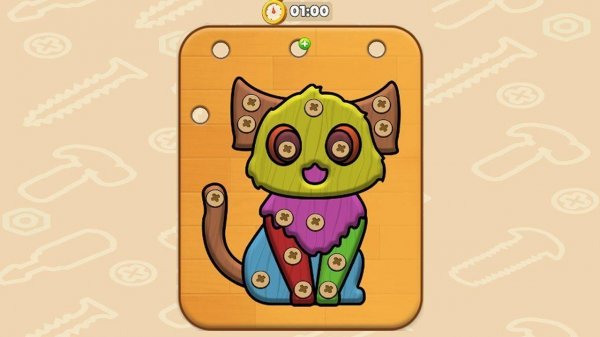
At its heart, Timber Fit Puzzle: Spatial Assembly is about understanding how shapes fit together in three-dimensional space. Players receive a set of wooden components, including blocks and connector pieces like pegs and slots. The goal is to arrange these elements so they interlock perfectly. This requires rotating each piece mentally and physically to find the correct orientation. The game rewards patience and careful observation rather than speed. Each puzzle feels like a small architectural challenge where every piece has a specific place.
Visual Design and Atmosphere
The game stands out with its handcrafted wooden aesthetic. Every block and connector has realistic wood grain textures and warm, earthy colors. This visual style creates a calm, inviting environment that reduces stress. Unlike many digital puzzles with bright, flashy graphics, Timber Fit Puzzle: Spatial Assembly feels like working with physical wooden toys. The lighting and shadows add depth, making the three-dimensional nature of the puzzles easy to perceive. This thoughtful design helps players focus on the logic without visual distractions.
Progression and Difficulty Curve
Puzzles start with simple two-piece connections and gradually introduce more complex assemblies. Early levels teach basic rotation and alignment skills. Later stages require multi-step solutions where pieces must be attached in a specific sequence. The difficulty increases smoothly, ensuring players always feel challenged but never overwhelmed. Each completed puzzle provides a genuine sense of accomplishment. The game does not rush players, allowing them to work at their own pace.
Control and Interaction
Interacting with the puzzles is straightforward. Players tap and drag to move pieces around the workspace. Swiping rotates a selected component to find the correct angle. The controls are responsive and intuitive, requiring no lengthy tutorial. Some puzzles involve removing a peg to free a block, while others require threading a connector through a series of slots. The interface remains clean and uncluttered, letting the puzzle itself take center stage.
Hint System and Assistance
When players get stuck, a subtle hint system offers guidance without revealing the full solution. Hints might highlight a piece that needs attention or suggest a rotation direction. This preserves the challenge while preventing frustration. The game encourages players to try different approaches before using hints. This design respects the player's intelligence and keeps the puzzle-solving experience rewarding.





Comments
0 comments