
Game Introduction
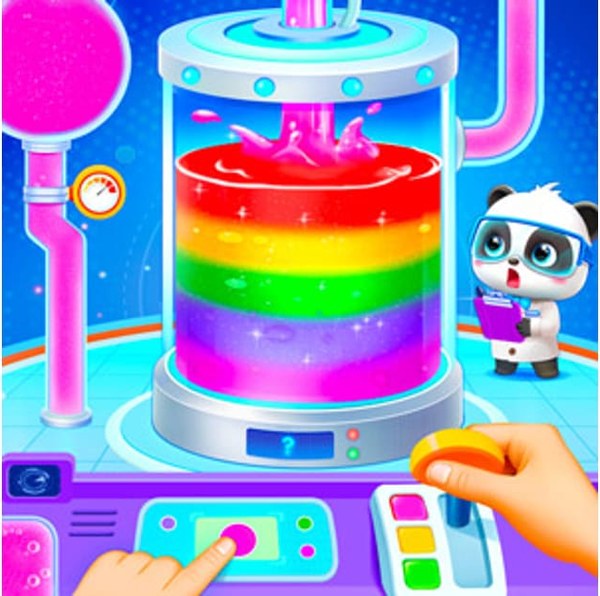
Panda Junior Science Lab is an educational simulation designed for young children who are curious about how the world works. The game creates a gentle, supportive environment where kids can explore basic scientific principles through simple, hands-on activities. Instead of complex theories, the game uses everyday materials and playful scenarios to teach concepts like motion, geology, and water purification. The experience is tailored to be accessible for both girls and boys, allowing each child to learn at their own pace without any pressure. The core objective is to make learning feel like play, encouraging natural curiosity and a love for discovery. What sets this game apart is its focus on real-world connections—each activity mirrors a process that children can observe in their daily lives, such as how a rocket launches or how rain becomes clean. The game is available online and runs directly in a web browser, making it easy for families to access anytime. There are no advertisements or distracting elements, ensuring a focused and safe learning space. Parents can feel confident that their children are engaging with content that is both entertaining and educational, with no inappropriate material. The game supports independent exploration, as each activity includes clear visual cues and simple instructions that even pre-readers can follow. By combining fun with foundational science, Panda Junior Science Lab helps build early STEM awareness in a way that feels natural and enjoyable.
How to Play
Players begin by choosing an activity from a simple menu. In one activity, they select a balloon, inflate it by tapping or clicking, and then release it to see how air pressure can propel a small rocket. Another activity involves shaping soft material into a globe and placing labels to identify different layers of the Earth. A third activity lets children build a water filter by stacking layers of sand, gravel, and cloth to clean murky water. Each step is guided by on-screen prompts that show what to do next, so children can progress independently. The controls are designed for small hands, with large buttons and simple drag-and-drop actions. There is no time limit or scoring, allowing kids to repeat steps as many times as they like. This low-pressure approach helps children focus on the process of discovery rather than on winning or losing. Parents may need to assist with reading the initial instructions, but once started, most children can continue on their own.
Game Features
The game includes several interactive science experiments that teach real-world principles. Children can build and launch balloon rockets to learn about air pressure and motion. They can create a model of the Earth using soft material to understand its internal structure. They can also construct a rainwater filter to see how impurities are removed from water. The game provides a completely safe environment with no advertisements, no external links, and no inappropriate content. Activities are presented with clear, step-by-step guidance that makes complex ideas easy to grasp. The game is designed to be played online without any downloads, and it works on most modern web browsers. It is suitable for children who are just beginning to explore science, as well as for those who want to reinforce concepts learned in school. The hands-on nature of the activities encourages active learning, and the ability to repeat experiments helps solidify understanding. The game also supports multiple play sessions, so children can return to their favorite activities again and again.
Tips for Success
To get the most out of Panda Junior Science Lab, encourage children to repeat each activity several times. Repetition helps reinforce the underlying concepts. After completing an experiment, ask open-ended questions like “What do you think made the rocket move?” or “Why do you think the water became clearer?” This helps connect the game experience to real-world science. Let children explore freely without correcting every step—mistakes are part of learning. Finally, try to relate each activity to something in daily life, such as discussing how a real rocket works after launching the balloon version.








Comments
0 comments